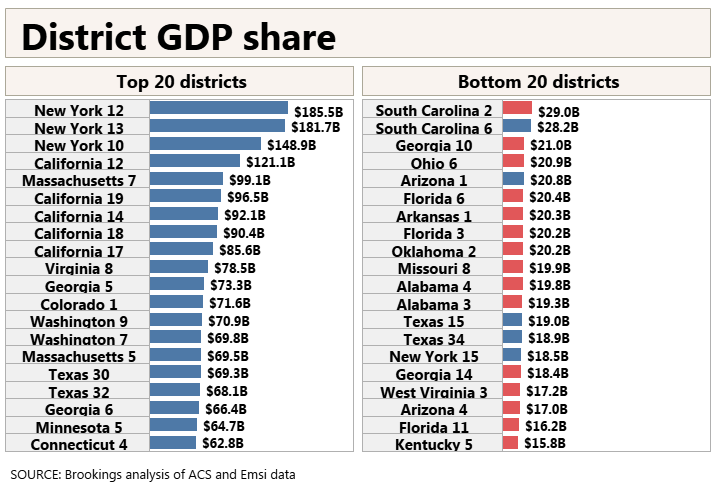
2018 was a pretty bad year, both for this blog and for the world. 2019 might be better, but I have my doubts. Here are a bunch of links I've saved from the last part of the year:
My Dad's Friendship With Charles Barkley – NPR Only A Game. This is a great read.
#CardCorner: 1958 Topps Wally Post - National Baseball Hall of Fame. Local legend from St. Henry, Ohio.
Nebraska vs. Oklahoma State in an old-school battle in South Dakota? How did that happen? - Omaha World-Herald. Here because of the gym.
The game of their lives was 25 years ago. They’re still replaying it in their minds. - Washington Post
How Christmas evolved from raucous carnival to domestic holiday - The Economist
A Storm and a Strike Hit Blueberry Giant's Global Supply Plans – Bloomberg
TREADING WATER | Unfocused and underfunded, goal of cleaner water falters – Cedar Rapids Gazette
Uncertain fate awaits quirky Rochester landmark – Minnesota Public Radio
40 million Americans depend on the Colorado River. It’s drying up. - Grist
As oil and gas exports surge, West Texas becomes the world’s “extraction colony” - Texas Tribune
Oklahoma’s Future Rests in the Hands of Two Very Different Oil Billionaires - Bloomberg
Dr. Elon & Mr. Musk: Life Inside Tesla's Production Hell – Wired
The Genius Neuroscientist Who Might Hold the Key to True AI – Wired
Bizarre ‘dark fluid’ with negative mass could dominate the universe – what my research suggests – The Conversation
Indiana's 'broken arrow' — that time 5 nuclear bombs got caught fire – Indianapolis Star. How we survived the Cold War I will never know.
Austin Rising - Louisville Courier-Journal. A series on Austin, Indiana, where an HIV outbreak in 2015 linked to IV drug use shocked the Midwest.
Losing the Farm - Belt Magazine
The Corruption of the Republican Party – George Packer
The Plot Against America – The Atlantic. Paul Manafort
A college kid running for 13th Ward alderman gets a lesson in the Chicago Way – Chicago Tribune
The godfather of fake news – BBC
King of the Low Road – The Weekly Standard
These charts show how Democrats represent the growing modern economy – and how Republicans are left behind - CNBC
Finally, for the resolutions. One, I'm going to have to start exercising. I am not looking forward to that. Two, I'm going to have to take on a lot of maintenance projects this year. Finally, I'm going to try to get back into regular blogging, with at least two posts a week. We'll see how that goes.
Showing posts with label Local history. Show all posts
Monday, December 31, 2018
Thursday, March 29, 2018
Happy Opening Day
Except for Cincinnati, which has its first rain-out of the season today.
Labels:
'Tis The Season,
Civil society,
Fun,
Local history,
the National pastime
Sunday, February 25, 2018
Tuesday, May 30, 2017
Small Towns As The New Inner Cities
The Wall Street Journal goes to Kenton, Ohio to look at the demographic challenges facing many small towns:
In Hardin County, where Kenton is the seat, factories that once made cabooses for trains and axles for commercial trucks have shut down. Since 1980, the share of county residents who live in poverty has risen by 45% and median household income adjusted for inflation has fallen by 7%.There are definitely some similarities between the current struggles of many small, isolated towns and the challenges faced by inner city neighborhoods fifty years ago. Both areas lost jobs and hope while drug use and family failures spiraled up. Currently, we haven't seen the spike in violent crime in small towns, and hopefully we won't, but I expect that part of the inner city collapse rose up with the feeling of hopelessness that grew up out of the utter lack of opportunity and impact of drugs. It very well could crop up in today's seemingly abandoned small towns.
At the same time, census figures show, the percentage of adults who are divorced has nearly tripled, outpacing the U.S. average. Opioid abuse is also driving up crime.
Father Dave Young, the 38-year-old Catholic priest at Immaculate Conception, was shocked when a thief stole ornamental candlesticks and a ciborium, spilling communion wafers along the way.
Before coming to this county a decade ago, Father Young had grown up in nearby Columbus—where for many years he didn’t feel safe walking the streets. “I always had my guard up,” he said.
Since 1980, however, the state capital’s population has risen 52%, buoyed by thousands of jobs from J.P. Morgan Chase & Co. and Nationwide Mutual Insurance Co., plus the growth of Ohio State University. Median household income in Columbus is up 6% over the same span, adjusted for inflation. “The economy has grown a lot there,” said Father Young. “The downtown, they’ve really worked on it.”
Meanwhile, as Kenton—population 8,200—continues to unravel, he said he has begun always locking the church door. Again, he finds himself looking over his shoulder.
Tuesday, April 11, 2017
The Republican Party, In Summary
Alex Pareene goes over many of the things that make the Republican Party such a dysfunctional governing party:
The delegates to the county convention were a mix of elected officials (especially township trustees), party volunteers and business people. To best illustrate that the base had already been radicalized, all but two of the right-wing loon candidates for statewide office (State Attorney General candidate Betty Montgomery and Mike DeWine, who was the most sane candidate for U.S. Senate present-how times change) was endorsed by the delegates present. Later that week, I stopped by the county Recorder's office. He was the county political boss, and he confided to me that he and the other political wheel, the county Prosecutor, were terrified by how radical the base was, and how willing they were to back the morons who professed the greatest faith in the old-time right-wing media bullshit. Those two were more in it for the power and the ability to hand out patronage, and they were shocked that the majority of the local party was drinking the Kool-Aid.
As Pareene points out, one of the main problems is that the true believers are now a substantial minority in Congress. The problem is that they were already holding most of the positions at the state level. Jim Jordan was, at that moment in 2006, making the leap from the state-level stage to the national stage. My goal was to convince people that they shouldn't be electing morons like Jim Jordan and my opponent to government positions, but instead be electing people who were smart enough to vote for positions outside of the conservative dogma. Unfortunately, I had a hard time telling my friends and neighbors that they had a lot of stupid political beliefs. Instead, I tried to work my way around the edges of political discussions, and ended up absorbing a brutal shellacking from a rather dumb incumbent I ran against.
Pareene focuses on Trump's position as the Fox News viewer-in-chief, and how dangerous that is functional government. The unfortunate thing is that this movement has been building for almost 40 years, and it has taken completely unqualified dumbfuck being elected President of the United States for most folks to realize that stupid people have gradually been filtering up from the grassroots, and now they control almost all the levers of power. We've had plenty of time to realize what's happening, and the fact that I ran for office is evidence that it was completely obvious back in 2006. Now we have to reap the whirlwind.
If you want to understand intra-GOP warfare, the decision-making process of our president, the implosion of the Republican healthcare plan, and the rest of the politics of the Trump era, you don’t need to know about Russian espionage tactics, the state of the white working class, or even the beliefs of the “alt-right.” You pretty much just need to be in semi-regular contact with a white, reasonably comfortable, male retiree. We are now ruled by men who think and act very much like that ordinary man you might know, and if you want to know why they believe so many strange and terrible things, you can basically blame the fact that a large and lucrative industry is dedicated to lying to them....The radicalization of the base actually occurred earlier than Pareene lets on. He pinpoints it to the election of Obama, but, at least around here, it occurred before that. I ran for office in 2006 because I saw a Republican party being taken over by know-nothing idiots who believe all kinds of non-factual bullshit. That year was an election year for all of the statewide executive offices, and when there is a contested Republican primary election for Governor, my county's Republican party holds a County Convention. As one of the candidates for office, I was invited to speak, or I otherwise wouldn't have attended. The opening address was given by John Boehner, who, at the time, was House Majority Leader (he would become Minority Leader after the 2006 election). He rolled out a lot of red meat, but over the course of the day, his speech was one of the tamer ones given. Also present was House Freedom Caucus founder and do-nothing government paycheck thief Jim Jordan, who was leaving the Ohio Senate to run for Congress that year. I don't think he spoke, but if he did, it was while I was trying to keep from puking due to nerves before my speech. I gave my speech, which didn't stick to my script, but generally focused on the need for more spending on education. Not surprisingly, I was the only speaker who didn't mention guns, terrorism or abortion, and the only one who mentioned additional spending for education.
The bottom-feeding amorality of the sorts of people who sponsored the right-wing press, and the crummy nature of the products and services sold, shows exactly who was supposed to be consuming it: suckers. Or, more specifically, trusting retirees, with a bit of disposable income, and a natural inclination to hate modernity and change—an inclination that could be heightened, radicalized, and exploited....
Rather rapidly, two things happened: First, Republicans realized they’d radicalized their base to a point where nothing they did in power could satisfy their most fervent constituents. Then—in a much more consequential development—a large portion of the Republican Congressional caucus became people who themselves consume garbage conservative media, and nothing else.
That, broadly, explains the dysfunction of the Obama era, post-Tea Party freakout. Congressional Republicans went from people who were able to turn their bullshit-hose on their constituents, in order to rile them up, to people who pointed it directly at themselves, mouths open.
The delegates to the county convention were a mix of elected officials (especially township trustees), party volunteers and business people. To best illustrate that the base had already been radicalized, all but two of the right-wing loon candidates for statewide office (State Attorney General candidate Betty Montgomery and Mike DeWine, who was the most sane candidate for U.S. Senate present-how times change) was endorsed by the delegates present. Later that week, I stopped by the county Recorder's office. He was the county political boss, and he confided to me that he and the other political wheel, the county Prosecutor, were terrified by how radical the base was, and how willing they were to back the morons who professed the greatest faith in the old-time right-wing media bullshit. Those two were more in it for the power and the ability to hand out patronage, and they were shocked that the majority of the local party was drinking the Kool-Aid.
As Pareene points out, one of the main problems is that the true believers are now a substantial minority in Congress. The problem is that they were already holding most of the positions at the state level. Jim Jordan was, at that moment in 2006, making the leap from the state-level stage to the national stage. My goal was to convince people that they shouldn't be electing morons like Jim Jordan and my opponent to government positions, but instead be electing people who were smart enough to vote for positions outside of the conservative dogma. Unfortunately, I had a hard time telling my friends and neighbors that they had a lot of stupid political beliefs. Instead, I tried to work my way around the edges of political discussions, and ended up absorbing a brutal shellacking from a rather dumb incumbent I ran against.
Pareene focuses on Trump's position as the Fox News viewer-in-chief, and how dangerous that is functional government. The unfortunate thing is that this movement has been building for almost 40 years, and it has taken completely unqualified dumbfuck being elected President of the United States for most folks to realize that stupid people have gradually been filtering up from the grassroots, and now they control almost all the levers of power. We've had plenty of time to realize what's happening, and the fact that I ran for office is evidence that it was completely obvious back in 2006. Now we have to reap the whirlwind.
Labels:
Bad Ideas,
Do as I say not as I do,
Don't Drink the Tea,
Idiots,
Jerks,
Local history,
News in the Midwest,
Short Memories,
the crossroads of politics and stupidity,
Things I Don't Understand
Monday, April 3, 2017
It's Opening Day
The weather may not cooperate, but hopefully the crowds enjoy the Findlay Market parade and the start of baseball season in Cincinnati.
Wednesday, March 29, 2017
West Central Ohio Question
How did Russia, Ohio not make the list? https://t.co/WThWTpB0hU
— A Farmer (@afarmerinohio) March 30, 2017
Tuesday, September 20, 2016
This Explains A Lot
FiveThirtyEight:
“And that’s a home run” — the Cubs’ third of the night.It has been a tremendously long season, but it has improved markedly after the all-star break. And the Reds offense has managed to pull the Reds above several other teams. Mercifully, the Reds' miserable season is almost over, and all I have to hope for to keep this from being an entirely miserable season is to have the evil Cubs be eliminated from the playoffs, hopefully short of the pennant. God help us if they manage to win.
Brennaman could be forgiven for his lack of enthusiasm. The Reds are 63-87, 32 games out of first place in the NL Central, and he’s had to make the same call 242 times so far this season. With two weeks left to play, the Reds’ pitchers have allowed the most home runs of any team in major league history. It’s a staggering total: Cincy hurlers allow an average of 1.6 homers every 9 innings, or one every 21.2 at-bats (meaning they effectively turned average NL hitters into Larry Doby or Joe Carter).
But it’s also symptomatic of a pitching staff that is, by another measure, the worst ever — and the only one in history that would have been better off being stocked with replacement-level players instead.
The Reds have struggled to build an effective staff for a looooong time, having broken league-average in fielding independent pitching only twice in the past 21 seasons. (And this is even after accounting for Cincinnati’s home parks, which have tended to inflate scoring.) But this season’s version has taken bad pitching and elevated it into some kind of twisted art form....
Somehow the Reds have been the only staff in MLB history to post a cumulative WAR below the replacement level. Not every Cincinnati hurler has been historically bad — Anthony DeSclafani has done admirable work, leading the team with 1.9 WAR, and Raisel Iglesias has 1.3 WAR with a superb 3.30 FIP. But by the logic of the theory that underpins WAR, the Reds’ sub-replacement tally means they could have stocked their entire pitching staff with nothing but freely available fringe players and AAA callups, and they’d have won an additional game. To find another team that could say that, you’d need to hark back 127 years (!!) to the 1890 Pittsburgh Alleghenys, whose 23-113 record still stands as second-worst in the long annals of major-league failure.
Monday, July 18, 2016
How Dayton Explains Today's GOP
This is a very good piece at ProPublica about the Dayton region and the changing GOP. Here is a sample:
For decades, Dayton had been an exemplar of American capitalism and ingenuity — back when America not only invented things but still made the things it invented, Dayton did a lot of both. In 1890, it generated more patents per capita than any other city — there were the Wright Brothers and their bicycle shop, of course, but also James Ritty, the saloonkeeper who invented the mechanical cash register to keep his employees from pilfering dough, and John Patterson, who transformed Ritty’s invention into the National Cash Register company, and Charles Kettering, the engineer who turned Ritty’s creation electric. The sound of Dayton in these years was, literally, ka-ching. The Third National Bank was finished with imported marble and mahogany woodwork; patrons did their business at bronze check desks. Local hotels included the Biltmore and the Algonquin — the aspirations were transparent, and not unjustified.It leans toward the rural versus urban dynamic, with the suburbs being the swing vote. The prosperous suburbs with high percentages of college graduates tend to lean away from Trump, while the more working class suburbs are Trump country. It is depressing to me how many people I know who support Trump, but I don't think there is much that's going to change that. I suggest reading the whole piece, it is very good.
Kettering went on to found the auto parts giant Delco, where he developed the electrical starting motor and leaded gasoline, plus side ventures with DuPont and others to invent Freon and colored paint for cars. In the postwar years, Dayton had a higher concentration of auto workers than anywhere outside of Michigan. The city swelled with new arrivals in search of work — not just African-Americans on the Great Migration, but Scots-Irish up from Kentucky and Tennessee. By 1960, Dayton was still one of the 50 largest cities in the country — bigger than Charlotte, Tucson and Austin.
But as Whalen’s tenure carried into the 1970s, changes were underway. As elsewhere, the arrival of Southern blacks had been answered with white flight. In 1930, nearly three-quarters of Montgomery County’s population lived in Dayton, but half a century later, that share had plummeted to less than a third. They had moved to working-class inner suburbs like Miamisburg and Huber Heights, tight-knit communities with modest, well-kept frame houses and bungalows, and more upscale Oakwood or Beavercreek, which was just across the line into Greene County. The city that remained was the second-most racially segregated of Ohio’s eight largest. And the Appalachian migrants had added a more conservative element to the area’s political landscape.
Monday, May 2, 2016
Indiana - The Southern State in the Midwest
Well, except for Missouri (which wasn't part of the Northwest Territory). Here's Fiverthirtyeight on why Indiana is weird:
In 1850, census canvassers started asking Americans where they’d been born, and by looking at state residents who were born in the U.S. (but not in their current state), we can see just how much Indiana stood apart from its neighbors in the Old Northwest. Let’s start with people born in New England, the “Yankees” widely considered to be better educated and more ambitious than their peers. In 1850, only 3 percent of Indiana’s U.S.-born residents hailed from New England. (The Old Northwest average was 10 percent.) Only 20 percent of Indiana’s U.S.-born residents hailed from Mid-Atlantic states such as Pennsylvania and New York. (The Old Northwest average was 42 percent.) But a whopping 44 percent of Indiana’s U.S.-born residents hailed from the South — easily the highest percentage in the Old Northwest, where the average was 28 percent.1Or, to put it another way, Indiana didn't end up with its fair share of Catholics and Lutherans. Also, not surprisingly, Indiana ranks third amongst states for demographics most like America in the 1950s, just behind Kentucky and West Virginia.
Just as important as their numerical advantage, the Southerners got to Indiana first and thus dominated its early politics. (At the state’s constitutional convention, 34 of the 43 delegates hailed from below the Mason-Dixon Line.) They created its local culture, shaping everything from what Hoosiers ate to how they worshipped. (Southerners imported their Baptist and Methodist beliefs, and in the 1850 census 60 percent of Indiana churches belonged to those denominations.) More than any other Midwestern state, Indiana ended up with a certain kind of citizenry: white, working-class Protestants with Southern roots.
And the thing is, it never really changed. Consider the wave of immigration that defined America starting in the 1880s. Indiana had always been the least diverse state in the Old Northwest. And yet, even after millions of Europeans arrived by steamship, were processed at Ellis Island, and scattered across the country, Indiana still featured a foreign-born population of just 3 percent. (The Old Northwest average was approaching 20 percent.) Or consider the rise of the modern city. In 1920, Chicago’s population was 2.7 million; Cleveland’s was 800,000. Indianapolis’s, by contrast, was only 314,194. But Indianapolis wasn’t just smaller — it was more provincial, less vibrant, a city with a population that was only 3 percent African-American and 70 percent native-born and white. (In Chicago and Cleveland, the share of native-born whites was about 25 percent.)...
Among its Old Northwestern peers, Indiana ranks last in median family income. It ranks last in the percentage of residents who’ve completed a bachelor’s degree. It ranks first in the share of the population that is white Evangelical Protestant and in the share of residents who identify as conservative. On these and a host of other measures — percentage of homes without broadband internet, rate of teen pregnancy, rate of divorce — you’ll often see Indiana finishing closer to Kentucky or Tennessee than to Ohio or Wisconsin. In other words, you’ll see 200 years of history making its presence known.
Sunday, April 10, 2016
Masters Weekend Links
Hopefully your Sunday afternoon was less of a letdown than Jordan Speith's. Here are some stories I thought were interesting:
How Canada Was Shut Out of the NHL Playoffs - VICE Sports
Sacramento Shakedown - The Baffler
The Unbearable Whiteness of Baseball - New York Times
How Canada Was Shut Out of the NHL Playoffs - VICE Sports
Sacramento Shakedown - The Baffler
The Unbearable Whiteness of Baseball - New York Times
The sugar conspiracy - The Guardian
A key ingredient for life on Earth may have crash landed here from space - Washington Post
How Catholic Are We? and Sister Blandina and the Road to Sainthood - Cincinnati Magazine. A Catholic twofer.
A key ingredient for life on Earth may have crash landed here from space - Washington Post
How Catholic Are We? and Sister Blandina and the Road to Sainthood - Cincinnati Magazine. A Catholic twofer.
The Enduring Mystery of 'Jawn', Philadelphia's All-Purpose - Atlas Obscura (h/t C Moore)
City of Water - The New Yorker. From 2003, but gives good information on the New York water system, and the Sandhogs who built it.
Something Uneasy in the Los Angeles Air - Curbed Los Angeles. On the history and effect of the Santa Ana winds.
The Secret Movement to Draft General James Mattis for President - Daily Caller
Virgins, Booze and American Elections - New York Times
Don't Dismantle Government - Fix It - American Prospect
Why is the U.S. unwilling to pay for good public transportation? - The Conversation
10 Demographic Trends that are Shaping the United States and the World - Pew Research Center
The Brainbelt Awakening - Foreign Policy
100-Year-Old Frost Maps Show How Climate Change Has Shifted the Growing Season in the United States - Slate and Length of Growing Season - US EPA
City of Water - The New Yorker. From 2003, but gives good information on the New York water system, and the Sandhogs who built it.
Something Uneasy in the Los Angeles Air - Curbed Los Angeles. On the history and effect of the Santa Ana winds.
The Secret Movement to Draft General James Mattis for President - Daily Caller
Virgins, Booze and American Elections - New York Times
Don't Dismantle Government - Fix It - American Prospect
Why is the U.S. unwilling to pay for good public transportation? - The Conversation
10 Demographic Trends that are Shaping the United States and the World - Pew Research Center
The Brainbelt Awakening - Foreign Policy
100-Year-Old Frost Maps Show How Climate Change Has Shifted the Growing Season in the United States - Slate and Length of Growing Season - US EPA
Wednesday, February 24, 2016
Congratulations Xavier Musketeers
They pulled off the biggest win in school history. When I started listening to their games back in 1987 or so, I never would have guessed they would be the fifth-ranked team in the nation and would knock off the number one team.
Monday, February 15, 2016
Not Looking Good for the Redlegs
USA Today:
And that may be optimistic. They lost 98 games last year with Chapman and Frazier on the team, and they are still talking about trading Jay Bruce and Brandon Phillips. I did a little research, and the Reds would have to lose 102 games to set a record for the most losses in a season, topping the terrible 1982 season (take a look at that lineup). But to have the worst winning percentage in a season, they'd have to lose 107 games, which would be worse than the 1934 Reds. Even this miserable team should be able to do better than that. I guess we'll find out. Pitchers and catchers report Thursday.
Labels:
'Tis The Season,
Local history,
the National pastime
Tuesday, January 19, 2016
Rob Manfred Splits the Baby in Rose Case
Cincinnati Enquirer:
Pete Rose is headed to the Hall of Fame – the Reds Hall of Fame.Manfred got what he wanted, keeping Pete Rose out of the coaching ranks and preventing him from humiliating baseball with embarrassing gambling story after gambling story. Cincinnati gets to draw in fans with events honoring Rose, which the rest of baseball can just ignore. Pete may eventually get into the Baseball Hall of Fame, but it will only be after he is dead, and can no longer make an ass of himself. Good for the Reds, good for Pete and good for baseball.
Not only that, Rose’s No. 14 will be retired this June and a statue is on the way, the team announced at a press conference Tuesday morning at Great American Ball Park. The team will honor Rose and the rest of the Big Red Machine during a three-game series against the Padres, June 24-26.
“Pete was told that in the immediate future he is probably not going to be able to (be inducted) in Cooperstown and we certainly wanted to make sure we picked up that vacuum and the commissioner gave us permission to do that,” Reds CEO Bob Castellini said. “We couldn’t be more pleased that it is now. Now is the time.”
The Reds Hall of Fame had employed the same rule that the National Baseball Hall of Fame and Museum has had since 1991, barring any players on baseball’s permanently ineligible list from induction. In December, Major League Baseball commissioner Rob Manfred denied Rose’s request to be lifted from baseball’s banned list.
The Reds Hall of Fame board of directors voted unanimously to change the bylaws and elect Rose to the team’s Hall of Fame. The board bypassed its usual selection process that involves fans and media voting to make Rose the lone inductee in 2016.
“I’m not going to sit here and say this is the second-best thing, because it’s not,” Rose said on Tuesday. “Maybe it would be if I wasn’t from Cincinnati, but I’m from Cincinnati, so this is the first big thing.”
The Reds, who had not honored Rose directly in their ballpark, will now lift the self-imposed ban. Rose’s No. 14 will join the team’s other nine retired numbers and 42 – retired across baseball for Jackie Robinson. Rose will also have a statue in his honor commissioned at some point, Castellini said on Tuesday.
Castellini said all of the Reds’ celebrations of Rose come with the blessing of Manfred and Major League Baseball.
Wednesday, January 6, 2016
Congratulations, Junior
I'm glad you are going to the Hall:
Saturday, December 19, 2015
Weekend Before Christmas Links
"'Twas the weekend before Christmas, and all through the land, not a Republican would give a Syrian a hand."
Well, that GOP debate was very ugly, but here are some stories to keep you entertained if you already have your shopping done (I may get started):
The Radicalization of Luke Skywalker: A Jedi’s Path to Jihad – Decider and This is the state where people are most nuts about Star Wars – Wonkblog. Hmm, the rebel alliance as a cult, and this data point...
Well, that GOP debate was very ugly, but here are some stories to keep you entertained if you already have your shopping done (I may get started):
Oasis in the Desert – SB Nation
The King of Tides - Southwest: The Magazine. From Longreads Best of 2015 Sports Writing
A Tale of Two Sisters - Psychology Today
Want to Master Draft-Horse Farming? Sterling College’ll Teach You How – Modern Farmer
Will Tucker’s Ever Rise From the Ashes – Cincinnati Magazine
Fish Stocks Are Declining Worldwide, And Climate Change Is On The Hook – The Salt
The Ominous Story of Syria's Climate Refugees - Scientific American. Yes, grandpa, climate change isn't a hoax, and it has deadly consequences (what I'd like to say at Christmas dinner, but won't).
A White-Hot Christmas Wraps Up Earth's hottest Year On Record - Bloomberg
The Ominous Story of Syria's Climate Refugees - Scientific American. Yes, grandpa, climate change isn't a hoax, and it has deadly consequences (what I'd like to say at Christmas dinner, but won't).
A White-Hot Christmas Wraps Up Earth's hottest Year On Record - Bloomberg
The Radicalization of Luke Skywalker: A Jedi’s Path to Jihad – Decider and This is the state where people are most nuts about Star Wars – Wonkblog. Hmm, the rebel alliance as a cult, and this data point...
In Lincoln, Neb., a View of Full Employment – Wall Street Journal
The Wright Brothers: Pioneers of Patent Trolling - Time. (h/t the family patent lawyer). This is the part of the Wright Brothers history that doesn't get much attention locally, but was brought to my attention by Jonathon Larson a few years back. I'd like to note that Dayton, and much of the rest of industrial Midwest, was the Silicon Valley of the industrial age at the turn of the last century. Apparently, innovation and patent law bring out the worst in some folks (the Wright brothers, Apple, Samsung, Martin Shkreli, etc.)
The Inventor of Auto-Tune - Priceonomics
The Machiavelli of Maryland - The Guardian
Birdman: The Pigeon King and the Ponzi Scheme that Shook Canada - New York Times Magazine
For Republicans, bigotry is the new normal - Washington Post. Well, it always has been in my lifetime, but it seems to get stronger and stronger as the nation continues its demographic change. It makes me cringe anytime one of the GOP presidential candidates says, "we have to take back our country."
Can we stop pretending Republicans care about the deficit now? - The Plum Line
The GOP's Foreign Policy Fantasy Problem - Daniel Larison. And Larison is no Democrat or Obot.
How a Quiet Corner of Iowa Packs Such a Fierce Conservative Punch – The Upshot. These are the folks to blame for foisting Steve King on an innocent nation.
Friday, December 4, 2015
Monday, October 26, 2015
University of Dayton Football vs. the Ku Klux Klan
Tom Archdeacon had a great story yesterday about how the UD football team busted up a Klan gathering meant to intimidate students, teachers and administrators at the Catholic school at the height of the Klan's strength in the 1920s:
According to a 1920 census, 28 percent of Dayton’s population was either foreign born or had foreign-born parents. Most were from central, southern and eastern Europe and the majority were Catholic.One day, UD's football coach got a jump on the Klan:
Add to that the growing prominence of the University of Dayton — which had changed its name in 1920 from St. Mary’s College — and you had a Catholic presence in the city that became a real target for a xenophobic, white Protestant hate group.
During that time it was estimated that Ohio had the most Klan members of any state. Summit County was said to have the largest chapter in the United States, some 50,000 members who included the county sheriff, the Akron mayor, several judges and county commissioners and most people on the Akron school board.
Licking County used to host the Klan’s state conventions at Buckeye Lake, annual affairs that regularly drew over 70,000 people.
Dayton, Trollinger discovered, was one of six cities in the nation to be designated Klan-friendly ‘’hooded capitals.” There were said to be 15,000 Klan members here and while they often held rallies around the city, nothing matched that crowd that poured into the Fairgrounds on Sept. 21, 1923.
I went through microfilm copies of the newspapers from back then and found several stories on the rally that drew some 32,000 to the fairgrounds.
“Dayton Mecca For Meeting of Klansmen” read the front page headline in the Dayton Evening Herald.
Special trains brought thousands of participants to town.
There was a massive parade up Main Street from the fairgrounds through downtown to the river and back again. The sidewalks were filled with cheering crowds who watched the spectacle that included:
Some 25 robed and masked men on horseback, a white-robed 70-piece Klan band and numerous floats including one by the Junior KKK and some representing area schoolhouses. Klan contingents from as close as Springfield and Middletown, as well as Mercer, Miami, Warren and Greene counties marched in the parade alongside groups from as far away as Pennsylvania, West Virginia, Kentucky and Indiana.
Once back at the fairgrounds, a masked keynote speaker addressed the crowd. According to newspaper reports, he hammered home the same themes that again are popular with certain politicians today.
He warned of “the hordes of (immigrants) coming to these shores” and how the Klan was the one to stop all that....
Baujan recounted how he had gotten tipped that the Klan was coming to campus and was going to burn crosses on a hill in Woodland Cemetery just across the street from the school.Notre Dame had a similar fight with the Klan back at that time. It is hard to believe how almost nobody knows that the Ku Klux Klan, in its anti-black, anti-Catholic, anti-Jew incarnation in the 1920s, was a massive organization which essentially ran the Republican party in a number of states. The Klan was allied to the Womens' Christian Temperance Union in support of Prohibition. These groups were able to retain political power by preventing the 1920 census from being used to reapportion Congressional districts. This would have yielded power to rapidly growing cities which favored the end of Prohibition, and granted equal representation to the large Catholic and Jewish immigrant populations these groups detested. It is one of the less impressive periods in American history.
As Trollinger wrote, Baujan said he went “to the halls and called out my biggest football players.” He brought them to the cemetery and told them to wait until the Klan gathered around their burning cross and then to “take after them” and “tear their shirts off … or anything else you want to do.”
The Klan saw the football boys coming and ran through the cemetery without getting caught.
Baujan told Gaudet that soon after he was downtown and “some fellows at the Dayton Noon Luncheon Club” admitted they had been “among the Klan members who had been chased.”
He said “one of the best ones” was a well-known referee who regularly worked Dayton football games.
Saturday, July 18, 2015
Post-All-Star Game Weekend Links
Work and the weather have been beating the crap out of me, but I still managed to track down a few stories for you to take a look at this weekend:
Take Me Out To The Brain Game - SBNation
New Order: What's Behind the Sudden Surge in Pitchers Batting Eighth - Grantland
This is Baseball--British-Style - Vice Sports
Football in a Time of War: The Strange Story of the Steagles - priceonomics
The 9 Bullet Points of Doom for ESPN - Medium
Farming Hops During The Ultra-Hoppy Beer Craze - Modern Farmer. For Pete and Brian.
Unhealthy Fixation - Slate. On opposition to GMOs.
New Push for Sanctions on Belarussian Potash - Wall Street Journal. From a New Mexico Congressman. New Mexico produces 75% of the nation's potash.
The Fall Of A Dairy Darling: How Cottage Cheese Got Eclipsed By Yogurt - The Salt
The Really Big One - The New Yorker
Room At The Inn - Cincinnati Magazine
The Zankou Chicken Murders - Los Angeles Magazine. An old article, but interesting.
Intel Rechisels the Tablet on Moore's Law - Wall Street Journal. At some previous point, I noted the flexible definition of Moore's Law. Expect it to slow down more in the future.
The Age of Megaprojects - Project Syndicate. Also, the age of looting through public-private projects. Any savings from PPPs are in cutting worker wages, which is more than offset by returns paid to private capital. That is a feature of PPPs, not a bug.
The Destruction of a Black Suburb - Citylab. Interesting regional history.
Loyalist marches and bonfires are going the way of the Confederate flag - Irish Central. Not quickly enough for my taste. Good riddance to bad rubbish. Also, see Confederate Madness, Then and Now - The Daily Beast
Congress Attempts to Run the Government Under Norquist Rules - New York Magazine. Idiots following a jackass.
Kansas's Teacher Exodus - The Atlantic. The Republican war on public education in action.
The world eats cheap bacon at the expense of North Carolina's rural poor - Quartz
Take Me Out To The Brain Game - SBNation
New Order: What's Behind the Sudden Surge in Pitchers Batting Eighth - Grantland
This is Baseball--British-Style - Vice Sports
Football in a Time of War: The Strange Story of the Steagles - priceonomics
The 9 Bullet Points of Doom for ESPN - Medium
Farming Hops During The Ultra-Hoppy Beer Craze - Modern Farmer. For Pete and Brian.
Unhealthy Fixation - Slate. On opposition to GMOs.
New Push for Sanctions on Belarussian Potash - Wall Street Journal. From a New Mexico Congressman. New Mexico produces 75% of the nation's potash.
The Fall Of A Dairy Darling: How Cottage Cheese Got Eclipsed By Yogurt - The Salt
The Really Big One - The New Yorker
Room At The Inn - Cincinnati Magazine
The Zankou Chicken Murders - Los Angeles Magazine. An old article, but interesting.
Intel Rechisels the Tablet on Moore's Law - Wall Street Journal. At some previous point, I noted the flexible definition of Moore's Law. Expect it to slow down more in the future.
The Age of Megaprojects - Project Syndicate. Also, the age of looting through public-private projects. Any savings from PPPs are in cutting worker wages, which is more than offset by returns paid to private capital. That is a feature of PPPs, not a bug.
The Destruction of a Black Suburb - Citylab. Interesting regional history.
Loyalist marches and bonfires are going the way of the Confederate flag - Irish Central. Not quickly enough for my taste. Good riddance to bad rubbish. Also, see Confederate Madness, Then and Now - The Daily Beast
Congress Attempts to Run the Government Under Norquist Rules - New York Magazine. Idiots following a jackass.
Kansas's Teacher Exodus - The Atlantic. The Republican war on public education in action.
The world eats cheap bacon at the expense of North Carolina's rural poor - Quartz
Sunday, July 12, 2015
Ignorant Bigots: Not Just a Southern Thing
The Dayton Daily News shows up at the local country music festival to interview local folks who were flying the Confederate battle flag. Ignorance ensues:
Matt Hill proudly flew a Confederate battle flag below the American flag and a POW-MIA flag at his campsite at the Country Concert in Ft. Loramie on Thursday. For Hill and countless of others, the flap over the rebel flag being removed Friday from South Carolina’s capitol grounds is “ridiculous.”
“The first one stands for our country. There’s nothing more important than that flag right there. That goes on top,” Hill, 39, a white man from Leo, Ind. said as he pointed at the American flag. “The POW (flag) is for every man and woman that serves this country. We’ll never forget them and what they’ve done for this country. And that Confederate flag goes right along with that POW flag. That flag is (as much) a part of this country as is the Statue of Liberty. It was part of the South and the Civil War.”
Even as the same symbol was removed from outside the state capitol building in South Carolina following an extraordinary debate over the pain its mere presence causes, fans at the Country Concert — held in Ohio, a state that wasn’t part of the Confederacy — seems almost removed from that changing current. The flag is disappearing even in places where it traditionally flies, such as NASCAR races, but throughout the crowd in this days-long tribute to country music, people displayed the flag proudly and defiantly, sending a clear message that the debate that began in South Carolina is far from over.
Tim Bown, 58, of Hamilton is in favor of flying the Confederate flag, and he said officials in South Carolina should not have caved to the “1 percent, the people who whine all the time.”
“Whoever’s whining the most gets the most attention,” said Brown, who was not at the Country Concert. “That’s the problem, you’ve got a small group that’s complaining all the time. You get tired of it.”...
“We definitely do not think that it should be banned, that’s for sure, for anybody,” said Michaela Goettemoeller, 18, of Minster. She and her group of friends who displayed both American and Confederate flags at their campsite.
“It’s not really a racist thing, like, I saw on Facebook that there was a black guy pulled over on the side of the road and nobody else would help him and the people with the Confederate flag helped him out,” Goettemoeller said. “So, it’s not about racism. It’s about heritage.
“Growing up in a small town, everybody I grew up around had the Confederate flag, so, I just took it as my own.”
I assume Mr. Homan is referring to southern Mercer County pride, because I would wager he has no connections south of the Mason-Dixon line. But, somewhat in his defense, southern Mercer County, along with Fort Loramie and the rest of the German-settled area there has some pretty ugly racial history of its own:Nathan Homan of Maria Stein said displaying the Confederate flag was about acknowledging his southern pride. Homan and a group of friends were attending the 35th Annual Country Concert in Ft. Loramie. LISA POWELL / STAFF
So, does flying the Confederate flag signify support for racism, secession of slave-holding states from the United States in order to maintain the institution of slavery, opposition to civil rights, disenfranchisement, white supremacy and hundreds of years of violence and repression of blacks recorded in U.S. history? Not according to Ms. Goettemoeller (video below). For her, it is all about "heritage." In many ways, she is wrong, because the flag represents all of the things mentioned above. In some ways, though, she is right, but it definitely isn't a heritage to be proud of.Although he competed stride for stride with other members of the Virginia aristocracy by amassing over 8,000 acres of land and 400 slaves, John Randolph had doubts about the morality of the use of slaves all of his life.He was one of the first plantation owners to recognize the benefits of educating his slaves and treating them as humanely as possible. Randolph personally taught many of them to read and write. He also organized them into groups and gave each separate tracts of land for which they were to be responsible - an unusual approach in those days.Economic expediency compelled him to accept slavery as a fact of life while he lived, although he continually spoke against its evils. John Randolph never married. He battled the effects of tuberculosis all his life, and the use of opium as a pain killer resulted in his addiction to the substance. At the time of his death in 1833, three wills were found, and each granted freedom to all 400 of his slaves. His opium addiction, along with his contrarian views on issues, including slavery, caused many to question his sanity. The ownership of slaves meant economic power, and Randolph's next of kin immediately filed a will contest action, alleging he was incompetent.Thirteen years of legal battles followed. However, it was ultimately determined that Randolph's will of 1821 was valid. In that document, his intent was made clear: "I give and bequeath to all my slaves their freedom, heartily regretting that I have been the owner of one." John Randolph had gone to some lengths to see that his plan would be carried out. He set aside $30,000 for the purchase of land in Ohio and supplies for their journey to freedom. He secured the promise of an old friend and judge, William Leigh, to settle the newly freed slaves in Ohio.Although it was perhaps unknown to Randolph and Judge Leigh, Ohio in the 1840's was anything but a hospitable place for people of color. Just a year after Ohio had become a state in 1803, the General Assembly passed a law entitled "An Act To Regulate Black and Mulatto Persons."The law decreed that "No Negro or Mulatto should be allowed to settle in the state unless he could furnish a certificate from some court...of his actual freedom...The Blacks already living in the state must register before the following June with the county clerk..." No black person could register without paying a registration fee of twelve and a half cents. Whites were forbidden to employ a Negro unless he had a certificate of freedom.The newly freed Randolph slaves, now numbering 383, left Virginia on June 10, 1846 - thirteen years after being given their freedom. They ranged in age from an infant less than one year old to Granny Hannah, who had passed the century mark.With them they carried a certificate of the Clerk of Court of Charlotte County, Virginia, which listed the first names and a description of all the freed slaves. The document confirmed that Shadrach, (No. 514), born in 1796, was among those freed. He was destined to become an interesting part of Sidney history. Also listed was Carter (No. 421). He would take the last name of Lee after arriving in Shelby County, and his descendants would include Sidney's first black mayor.This was no ordinary group of southern blacks. Randolph had to seen to it they were educated. Typical was Clem Clay, who would become an engineer after settling in Ohio. Most had developed trade skills. Some had horses, but the majority walked the 500 miles to what they were sure would be the Promised Land.Judge Leigh had carefully made his plans. According to research later compiled by Rossville, Ohio historian Helen Gilmore and late local author Leonard Hill, Leigh purchased about 3,200 acres of fertile Mercer County ground for in excess of $6,000. It is probable that Judge Leigh had heard of Carthagena, a Mercer County colony of free Blacks established by Augustus Wattles, a white Quaker, in the 1830's. Leigh purchased some land near Carthagena, and much land in the vicinity of Celina.After making it to Cincinnati, the adventurers worked their way up the Miami Erie Canal toward Mercer County. They never made it. Waiting at the dock in New Bremen were armed white settlers. Author Trudy Krisher recounted the scene in an article in a recent edition of Ohio magazine. The bewildered Negroes listened as three resolutions read out loud, one of which stated: "Resolved, That we will not live among Negroes; as we have settled here first, we have fully determined that we will resist the settlement of blacks and mulattos in this county to the full extent of our means, the bayonet not excepted." In later years, when the dispossessed land owners inquired about their land, they were told it had been flooded and was useless. (In fact, according to Helen Gilmore, there is some evidence that water was released from Grand Lake St. Marys to temporarily cover some of the land.)An editorial on the Cincinnati Gazette on July 2, 1846, commenting on the Randolph Slaves, summed up the feelings of many in Ohio at that time: "And now the poor creatures are among us! Why should this be? The people of Virginia...hear the call of death...the first step is to free the slaves, that they may lull the unquiet knawings of conscience- next to send them to Ohio so that they may be free. What right have they to be pouring in upon us their helpless, new made free?"The boats continued south on the canal to Piqua. In testimony given in a subsequent trial involving their land, Clem Clay recalled that they all left Piqua soon after to "come to a place called Sidney." The former slaves were first taken to a place in Shelby County Clay referred to as 'Carey's Plantation'. (The authors believe this is the present day Fort Loramie.)The July 14, 1893, edition of the Sidney Journal later carried an account of the reception they encountered. "In July of 1846 quite a commotion was caused in the village by the arrival of a boat carrying as passengers...about 100 Randolph slaves, just set free. The boat passed up to the vicinity of Berlin (Now known as Fort Loramie), but were not allowed to land. A mob received them with sticks and stones....It was the exclamation of one of the old Negroes that he guessed his 'Master (referring to Randolph) was his best friend, after all."Clay and the others went next to Sidney. A mob began to gather here as well, but appeals were made to their charity. Joseph Cummins, Guy Kelsey and others in Sidney convened a meeting at a local hotel to debate what to do. It was decided to allow a number of the Negroes to stay in Sidney. Clay recalled: "Well, a good class of white people took some on the farm, and some around to the dwelling houses...some settled around through Sidney...and the rest came to
Piqua."It was therefore here that these proud men and women first experienced the meaning of freedom and acceptance. The rest of the close-knit band boarded the canal boats for other areas, including Piqua, Troy, and Xenia. Others, including Carter Lee, eventually settled in New Bern, a canal town in Washington Township. Some went to Rumley, a settlement of Blacks in Van Buren Township dating from 1830....What of the Promised Land in Mercer County that had been purchased for Buddie Shang and the others? Helen Gilmore found in her research that Joseph Plunkett of Mercer County was appointed by Judge Leigh to look after his charges when he returned to Virginia. It was a tragic mistake.Beginning on December 16, 1846, Plunkett began to sell the 3,000 plus acres of prime land to area land owners. In a series of transactions over six years, he sold all the land for the total sum of $7,738. Evidence uncovered later showed that Plunkett had forged Judge Leigh's signature on the deeds. Plunkett also rented out some of the former slaves for work to local farmers. None of the money from the land or labor ever went to any of the former Randolph slaves.
Commencing in 1900, the remnants of the original band of intrepid Randolph survivors, (referring to themselves as the 'Originals" along with their offspring, known as the 'Buckeyes', assembled for reunions every few years. The Democrat reported in July of 1902 that the old slaves gathered, "...and the tales they told of their peculiar master were highly interesting."In the reunions from 1900 to 1906, Manson Brown of Sidney was elected an officer of the Randolph Slaves Association. Brown's relatives still reside in the area. As a result of discussions at these meetings, many members decided to file suit in order to recover the money rightfully due them from the sale of their Mercer County lands. Attorneys Beam and Henderson of Indianapolis pursued the case for over ten years, through the Ohio Supreme Court to the U.S. Supreme Court. At each level, the judgment of the Mercer County Common Pleas Court was affirmed: the plaintiffs had waited too long to sue, and the statute of limitations of 21 years had run out.
Subscribe to:
Posts (Atom)